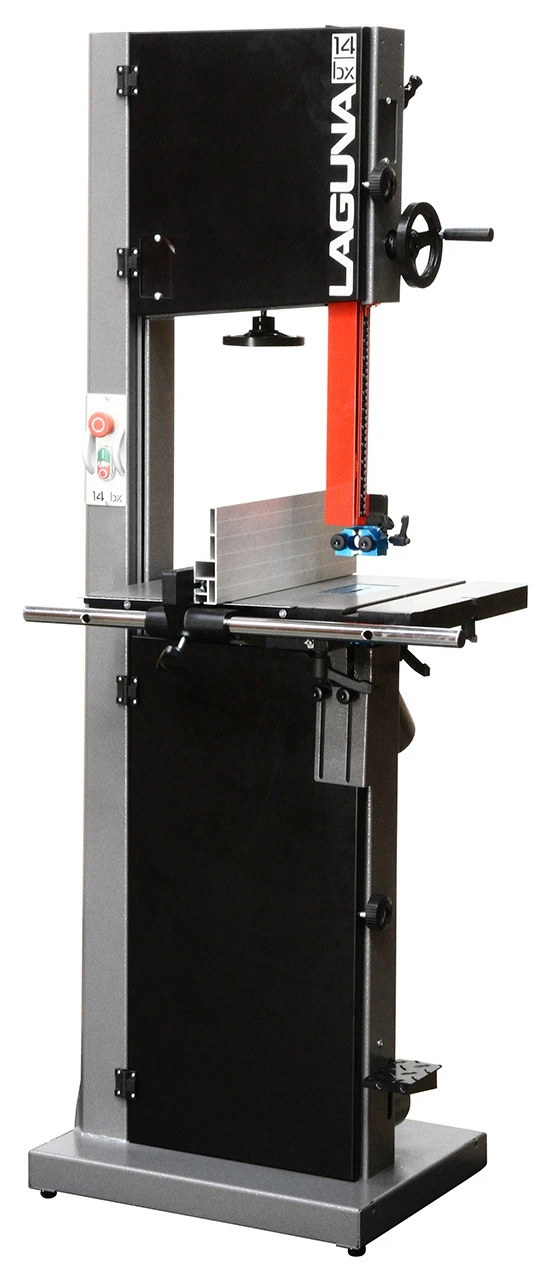
A band saw uses a continuous loop of narrow, toothed blade to make straight, curved, and irregular cuts. Its narrow blade makes it especially useful for cutting curves, shaping wood, and making cuts that would be difficult with a table or miter saw.
During cutting, the blade moves continuously downward through an opening in the work table. The user keeps the material flat against the table and gently guides it through the blade along the desired cut line. The blade guide should be adjusted close to the top of the material before cutting to minimize the amount of exposed blade. OSHA specifically recommends adjusting the guide to the thickness of the stock.
Compatible Materials
Woodworking band saws are commonly used with solid wood, plywood, MDF, and other approved wood products. The appropriate blade depends on the material, thickness, and type of cut. Tight curves generally require a narrower blade than straight cuts or broad curves.
Before You Begin
The moving blade is exposed at the point of cutting and can cause serious injury. Wear eye protection and keep fingers and hands away from the blade's cutting path. Secure loose clothing, jewelry, and long hair, and do not wear gloves while operating the saw.
Never force material through the blade. Use a push stick, jig, or other appropriate aid when your hands would otherwise come too close to the blade. OSHA recommends push sticks near the blade and jigs or fixtures for small workpieces. Wait until the blade has stopped completely before removing scraps from around the blade.
New to the band saw? Start with a larger piece of wood and simple straight or gently curved cuts to practice controlling the material and maintaining a safe distance from the blade.