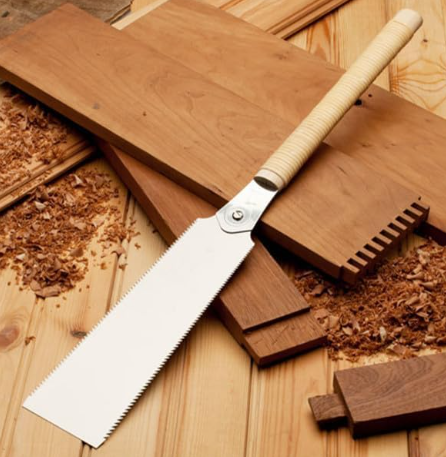
A Japanese Pull Saw is a hand-operated woodworking saw designed to cut on the pull stroke rather than the push stroke used by most Western-style saws. Its thin, flexible blade creates narrow, precise cuts with minimal material waste. It is commonly used for fine woodworking, joinery, trimming, and detailed woodworking projects.
To make a cut, secure the material to a stable work surface and the saw blade is positioned along the desired cutting line. The user begins with short, gentle pulling strokes to establish the cut, then continues with smooth, controlled movements. Some Japanese pull saws feature two cutting edges: one for cutting along the wood grain (rip cuts) and another for cutting across it (crosscuts).
Compatible Materials
Japanese pull saws are primarily designed for solid wood and plywood. Different blade types and tooth patterns are suited to specific cutting tasks. Fine-toothed blades are useful for precise cuts, while coarser teeth remove material more quickly. Avoid cutting metal, masonry, or other materials unless the blade is specifically designed for them.
Before You Begin
Japanese pull saws have extremely sharp teeth that can cause serious cuts. Wear eye protection, keep hands away from the cutting path, and securely clamp the material before cutting. Position your supporting hand so they remain clear of the blade.
Use light, controlled pulling motions and avoid applying excessive pressure. Never force the blade on the push stroke, as its thin construction can cause it to bend, buckle, or break.
New to using a Japanese pull saw? Start with a securely clamped piece of scrap wood and practice making straight crosscuts using gentle pulling strokes. Focus on maintaining a consistent cutting angle and allowing the saw's sharp teeth to do the work.