
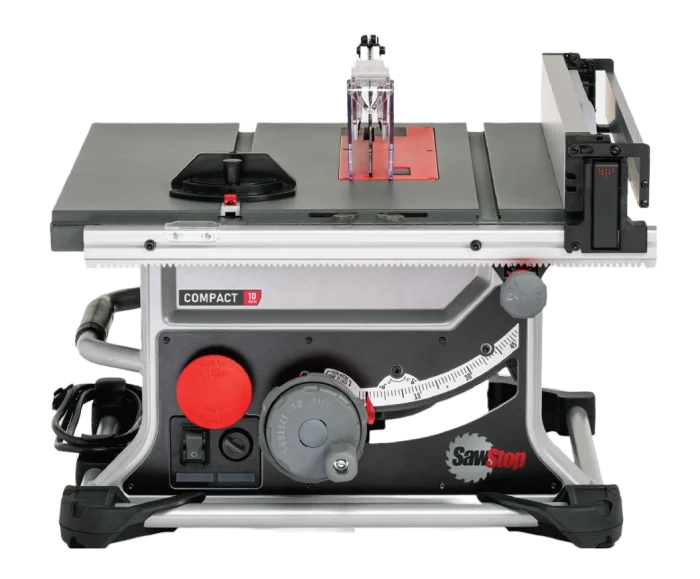
A SawStop table saw uses a circular blade that extends through a flat work surface to make precise cuts in wood and sheet goods. Table saws are commonly used for rip cuts, which cut material lengthwise, as well as crosscuts and other woodworking operations when equipped with the appropriate fence, miter gauge, blade, or accessory.
During a typical rip cut, the fence is positioned parallel to the blade to establish the desired width. The user keeps the material flat against the table and fence while feeding it forward through the blade. Push sticks and other workholding aids are used when necessary to keep hands safely away from the blade.
SawStop table saws include an active safety system designed to detect contact with skin, stop the spinning blade in milliseconds, and drop it below the table. This technology reduces injury risk but does not replace safe table-saw practices.
Compatible Materials
The table saw is primarily used for solid wood, plywood, MDF, and other approved wood products. The blade should be appropriate for the material and type of cut. Conductive materials, including very wet or green wood, can interact with the SawStop safety system and require special consideration.
Before You Begin
Table saws present serious blade-contact and kickback hazards. Wear eye and hearing protection, secure loose clothing, jewelry, and long hair, and do not wear gloves while operating the saw. SawStop specifically warns that gloves can snag on the blade.
Use the blade guard and riving knife when appropriate, and use push sticks or other aids whenever needed to maintain a safe distance from the blade. Never reach over or behind a moving blade or attempt to remove scraps until the blade has stopped.
New to the table saw? Become familiar with the fence, blade guard, riving knife, push sticks, SawStop safety system, and kickback prevention before making your first cut.
Knowledge Test and Skills Waiver
Maintenance and Troubleshooting